
Home · Books · Sanatana Dharma
सनातन धर्म
Sanatana Dharma
AN ELEMENTARY TEXT-BOOK OF HINDU RELIGION AND ETHICS
Illustrated edition · first published by the Central Hindu College, Benares, 1916
- Format
- A5 paperback, 233 pages
- Also as
- Kindle eBook
- Illustrations
- 10 diagrams, 14 colour plates
- ISBN
- [ISBN]
About the book
First published in 1916 for the Central Hindu College, Benares, Sanatana Dharma is a clear, compact introduction to the basic religious ideas, customs and ethical teachings of Hinduism: the One Existence, re-birth and karma, sacrifice, the worlds visible and invisible, the samskaras, the four ashramas and varnas, and the virtues in our relations with superiors, equals and inferiors, illustrated throughout by stories from the Ramayana, the Mahabharata and the Puranas.
This edition is newly typeset and proofread page by page against the 1916 printing. The Sanskrit verses are given in Devanagari, each line with a reading in English letters so that it can be said aloud, followed by the English translation, and the footnotes are restored. It adds ten two-colour teaching diagrams and fourteen coloured plates, with a full index and editorial notes.
From the pages
Every verse, readable aloud
ज्योतिषामपि तज्ज्योतिस्तमसः परमुच्यते ।
jyotishamapi tajjyotistamasah paramuchyate
ज्ञानं ज्ञेयं ज्ञानगम्यं हृदि सर्वस्य विष्ठितम् ॥
jnanam jneyam jnanagamyam hridi sarvasya vishthitam
“That, the Light of all lights, is said to be beyond darkness; wisdom, the object of wisdom, by wisdom to be reached, seated in the hearts of all.”
Bhagavad Gita, xiii, 17 · from Chapter I, The One Existence
Contents
PART I · BASIC HINDU RELIGIOUS IDEAS
- Introduction
- I. The One Existence
- II. The Many
- III. Re-birth
- IV. Karma
- V. Sacrifice
- VI. The Worlds—Visible and Invisible
PART II · GENERAL HINDU RELIGIOUS CUSTOMS AND RITES
- I. The Samskaras
- II. Shraddha
- III. Shaucham
- IV. The Five Daily Sacrifices
- V. Worship
- VI. The Four Ashramas
- VII. The Four Varnas
PART III · ETHICAL TEACHINGS
- I. Ethical Science, what it is
- II. The Foundation of Ethics as given by Religion
- III. Right and Wrong
- IV. The Standard of Ethics
- V. Virtues and their Foundation
- VI. Bliss and Emotions
- VII. Self-regarding Virtues
- VIII. Virtues and Vices in Relation to Superiors
- IX. Virtues and Vices in Relation to Equals
- X. Virtues and Vices in Relation to Inferiors
- XI. The Re-action of Virtues and Vices on each other
The illustrations
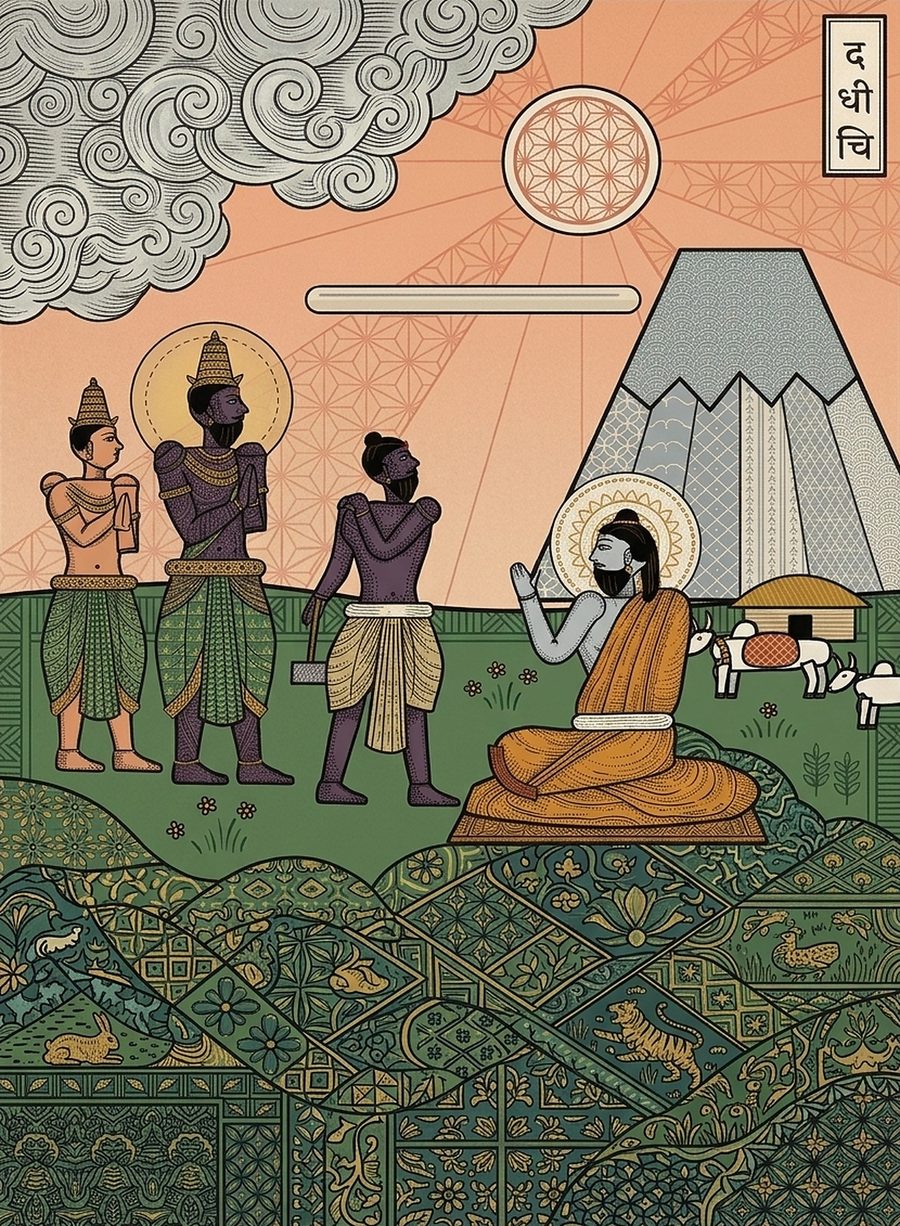
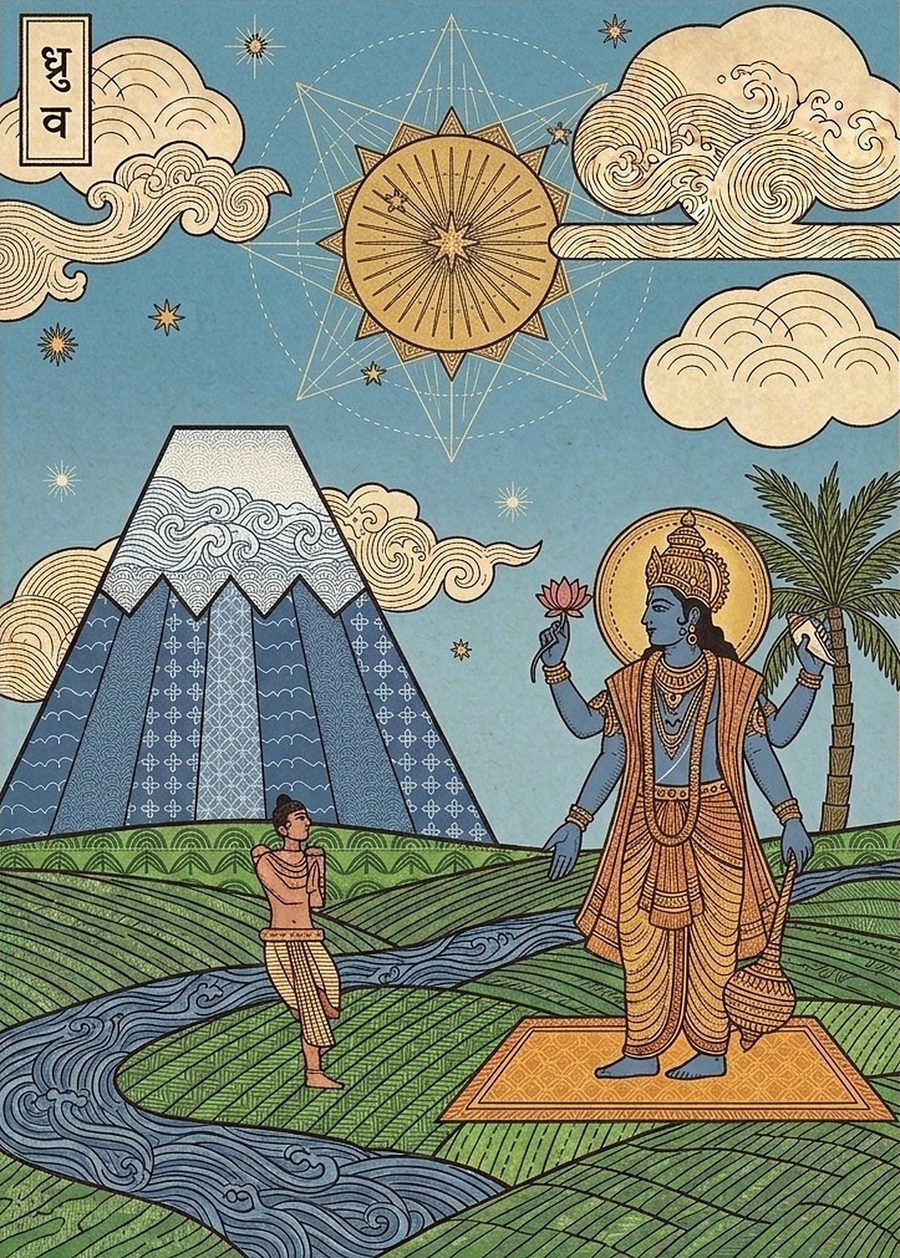
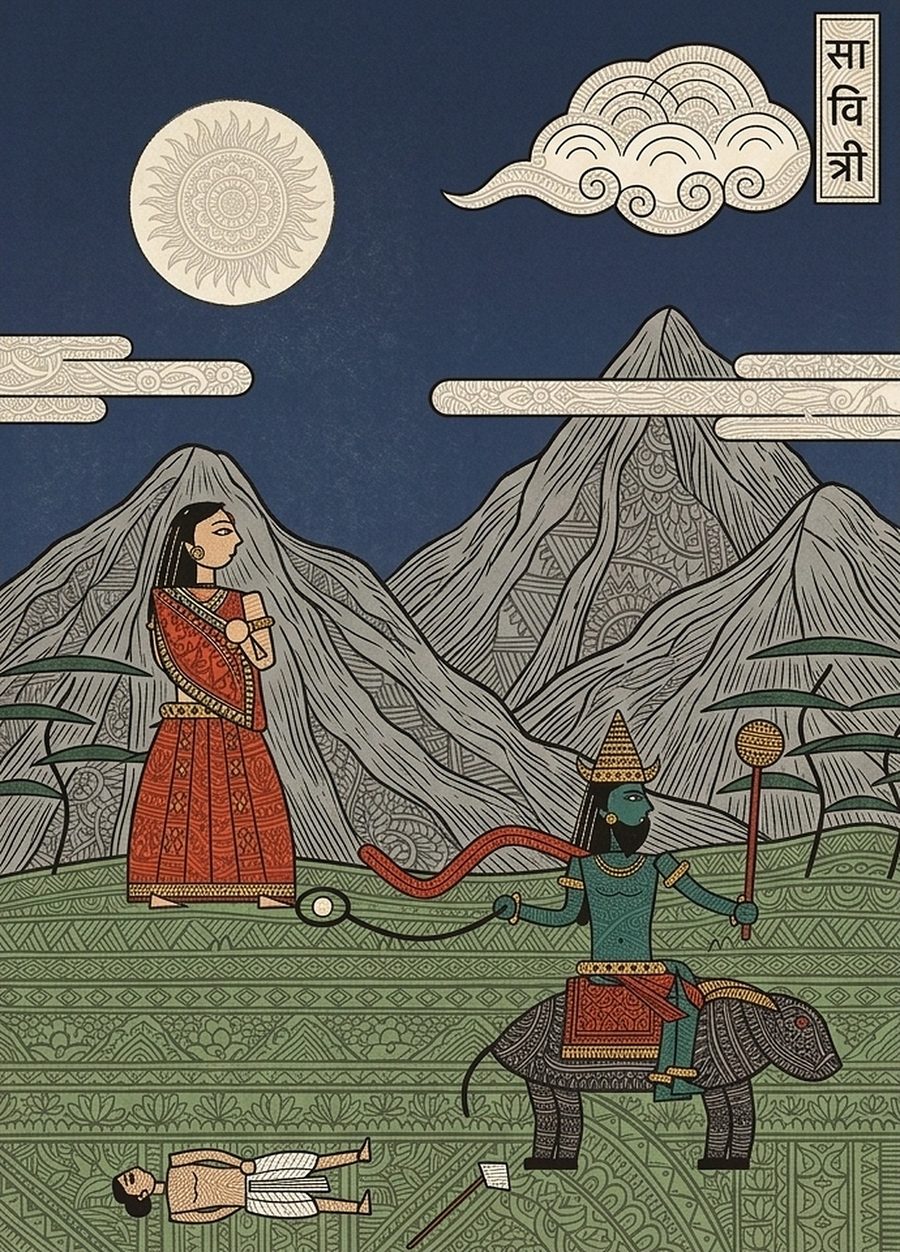
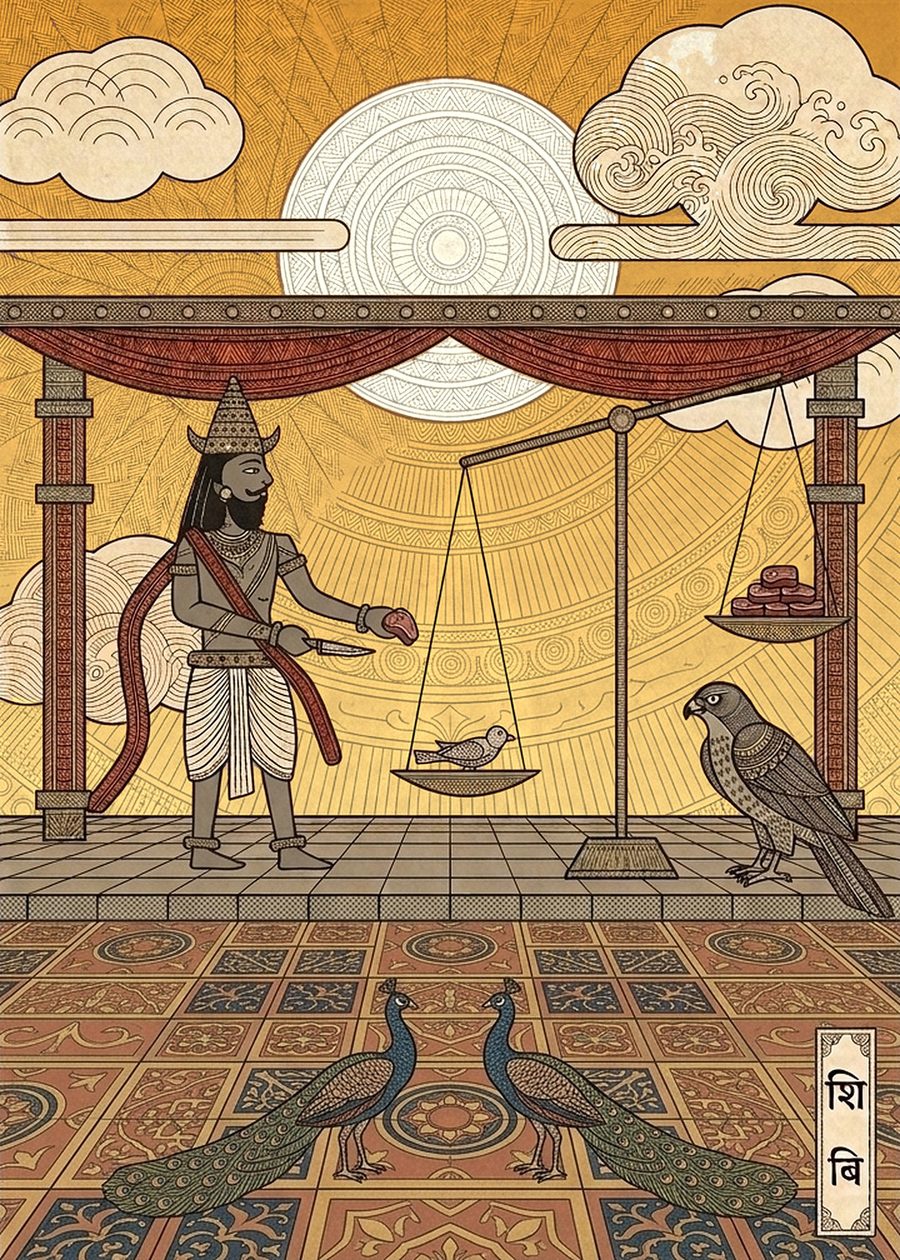
Fourteen coloured plates
- Dadhichi gives his body to the Devas
- Karna gives his armour to Indra
- Dasharatha grants Kaikeyi’s boons
- Vamana and King Bali
- Narasimha saves Prahlada
- Hari appears to Dhruva
- Rama and Ravana
- Savitri follows Yama
- Nala and Damayanti in the forest
- Rama, Sita and Lakshmana go into exile
- Yudhishthira and the dog
- King Shibi, the dove and the hawk
- King Rantideva and the wanderer
- Vishvamitra and the cow Nandini
Ten teaching diagrams
- Ishvara as Three (the Trimurti)
- The Ten Avataras
- The Pilgrimage of the Jiva
- The Three Worlds
- The Sheaths of the Jiva
- Death and Re-birth
- The Five Daily Sacrifices
- The Four Ashramas
- The Two Paths (Pravritti and Nivritti Marga)
- The Three Debts